LUX Panel Siding: Engineered Steel Cladding for Metro Vancouver
LUX panel siding is an engineered steel cladding system manufactured in Canada, built to combine the structure and fire resistance of a metal panel with the woodgrain, metallic, or textured look of a custom architectural finish. It’s installed on homes, multi-family buildings, and commercial properties across Metro Vancouver as a low-maintenance alternative to materials that fade, rot, or need regular refinishing — without giving up the warmth of a natural wood appearance.
At Silver Siding, we’ve spent over a decade installing exterior cladding systems suited to the Pacific Northwest’s wet, mild climate, and LUX panel installation gets the same level of attention as every other product we work with: a properly prepared substrate, careful moisture detailing, and clean panel fitting from the first course to the last. Whether you’re updating a single-family exterior or finishing a larger commercial façade, the goal is the same — a finish that holds its colour and performs the way it’s supposed to for decades.
What Are LUX Architectural Panels?
LUX architectural panels are an engineered steel cladding product, manufactured in Canada from heavy-gauge, Galvalume-coated steel and finished with a baked-on coating that replicates the look of natural wood grain, brushed metal, or a range of solid and textured colours. Unlike a paint or stain applied on-site, the finish is factory-baked into the panel before installation, which is part of why it holds its colour far longer than wood siding or composite products exposed to Metro Vancouver’s wet, low-sun winters.
Because it’s a steel product rather than wood or vinyl, LUX panel siding doesn’t rot, warp, or provide a food source for insects, and the panels carry a Class A non-combustible fire rating — a meaningful difference from wood-look products that only look fire-resistant. Like every cladding system we install, LUX panels go over a properly prepared substrate, with an air barrier installed first and, depending on the wall assembly, a rain screen assembly behind the panels to manage the moisture that inevitably gets behind any exterior cladding in this climate. The manufacturer backs the factory finish with a 25-year warranty, which covers fading and finish failure under normal conditions — separate from any workmanship coverage on the installation itself.
The trade-off worth knowing upfront: LUX is a premium-tier product, priced above standard vinyl or fiber cement siding, and its finish options come from a fixed manufacturer palette rather than an unlimited custom paint-match. It also reads as a distinctly modern, clean-lined material — a strong fit for contemporary and West Coast architectural styles, but not the natural choice if you’re going for a traditional brick or stone-veneer look. We’re happy to walk through whether the look and the budget line up before you commit to it.
Finishes, Colours & Profiles
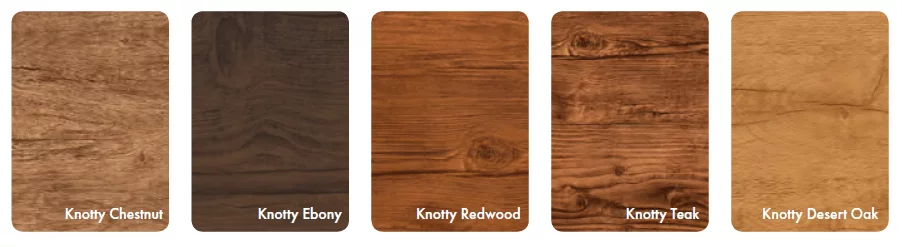
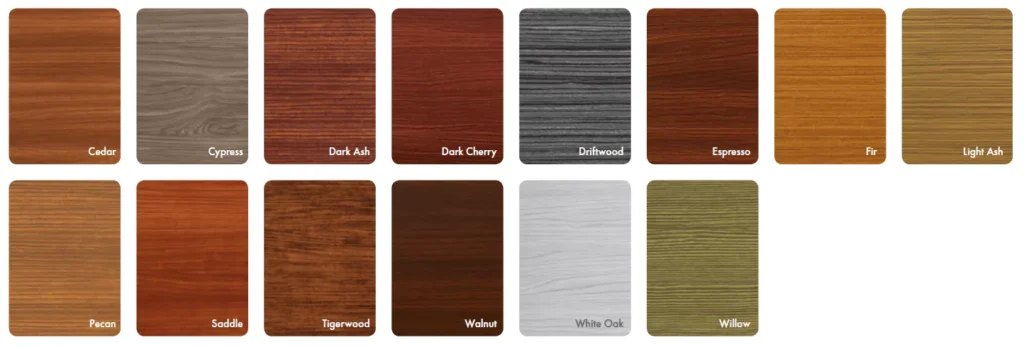
LUX panels come in four main finish families — woodgrain, knotty woodgrain, metallic, and textured solid colours — and within each family there’s a meaningful range of tone and pattern, not just one or two options per category. Because the finish is factory-applied, the colour and texture you choose are consistent across every panel on the job, with no batch-to-batch variation the way site-applied stains can have.
Woodgrain Finishes
The woodgrain and knotty woodgrain finishes are designed to read as real cedar or fir at a normal viewing distance, including grain texture and natural colour variation, without any of the upkeep wood siding needs in a wet coastal climate — no re-staining, no sealing, no risk of rot at the joints.
Metallic Finishes
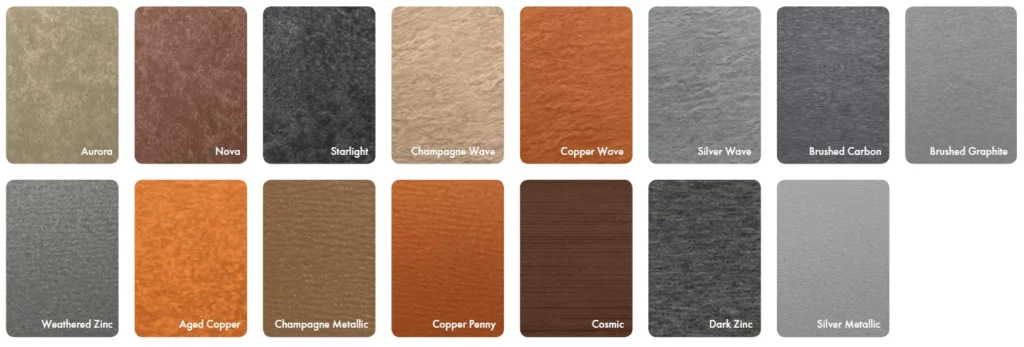
For a more contemporary, less wood-mimicking look, the metallic finishes lean into the fact that this is a steel panel rather than disguising it — a clean option for modern builds, accent bands, or commercial façades where a wood-look finish wouldn’t fit the design intent.
Textured Finishes
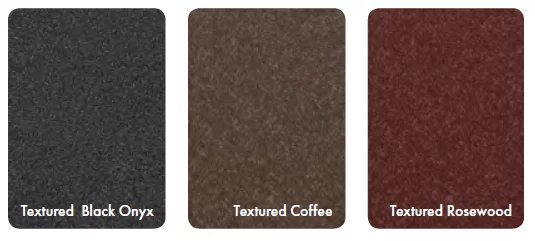
The textured and solid colour finishes sit between the two — a flat or lightly textured surface in a broader range of standard colours, often used where a building needs to match an existing colour scheme rather than introduce a new wood or metallic tone.
Installation Profiles: Horizontal, Vertical & Soffit
LUX panels can be installed horizontally for a traditional lap-siding look, vertically for a more modern board-and-batten appearance, or used as a vented soffit panel — the same finish family carried from the wall up to the roofline for a consistent look across the whole exterior. Panel lengths can be custom-ordered to fit the run of a wall, which cuts down on visible seams compared to products that only come in fixed lengths.
Where LUX Panels Work: Siding, Soffits & Accent Features
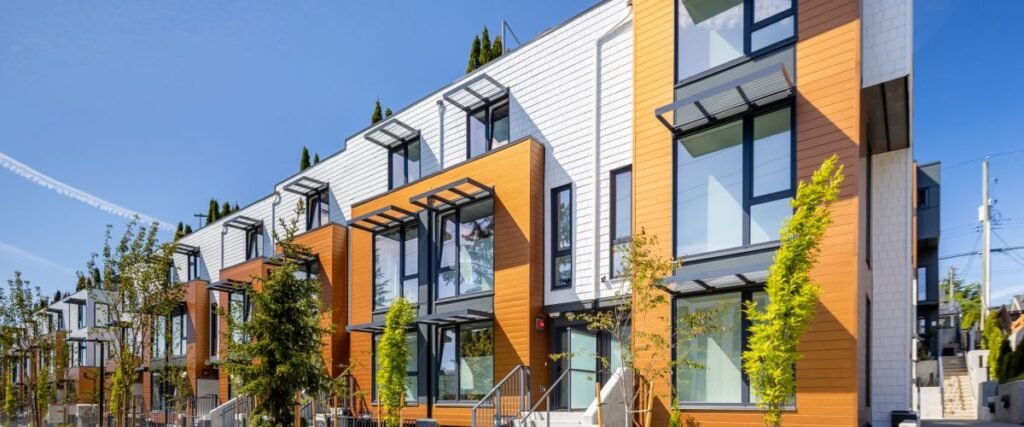
LUX panels are used across the full range of projects we see in Metro Vancouver — full exterior re-siding on single-family homes, accent walls and entry features layered against another material like stone or fiber cement, and larger-scale façades on multi-family and commercial buildings where a consistent, low-maintenance finish matters across a big surface area. Residential and commercial projects get the same level of detail from us; there’s no “lesser” install for a house versus a building.
One application that’s easy to overlook is soffits. Because LUX comes in a vented profile, it’s a natural match for projects that want the same finish carried from the siding up into the soffit rather than switching materials at the roofline. If your project also needs soffit installation, it’s worth planning both at the same time so the transition between wall and roofline is seamless.
What we’d steer you away from: installing LUX panels yourself. The finish and the corrosion resistance depend on proper fastening, flashing, and panel spacing — get those details wrong and you can void the manufacturer’s finish warranty or create the exact moisture problems the system is supposed to prevent. This is one of the cases where the material itself is forgiving, but a mediocre install isn’t.
Where This Service Is a Good Fit Around Metro Vancouver
The notes below reflect general patterns we see across the properties we work on in each area — not a guarantee for any specific home or building. A proper fit always depends on the existing wall assembly, the look you’re going for, and the project budget.
| Service Area | Why This Service May Be a Good Fit | Local Considerations |
|---|---|---|
| Vancouver | In Vancouver‘s mix of older character homes and newer infill construction, LUX panels can be a good fit anywhere a homeowner wants a clean, modern exterior without taking on the upkeep of real wood. | Dense, mixed-zoning streets sometimes mean tighter access for material delivery and panel handling, which we factor into scheduling. |
| North Vancouver | North Vancouver‘s hillside and view-oriented homes are often built or renovated with a contemporary style, which can line up well with LUX’s clean-lined metallic and woodgrain finishes. | Steeper lots and higher annual rainfall make proper flashing and drainage detailing especially important here. |
| West Vancouver | Larger, design-forward properties in West Vancouver — many close to the water or set into the mountainside — are a common fit for a premium, low-maintenance panel system, particularly on accent walls and full-façade upgrades. | Properties closer to the waterfront see more sustained moisture and wind exposure, which is a normal part of detailing any cladding system here. |
| Burnaby | The ongoing mix of multi-family and commercial development in Burnaby is a reasonable fit for LUX’s custom panel lengths, which can reduce material waste on larger façades compared to fixed-length siding products. | Larger commercial and strata projects sometimes need coordinated scheduling with other trades, which we factor into the timeline. |
| Richmond | The flatter terrain and newer residential and commercial construction in Richmond often suit LUX panels as both a wall and soffit material, especially where a consistent finish from wall to roofline is the goal. | Richmond’s exposure to fog and consistent coastal humidity is a normal consideration for any exterior cladding choice in the area. |
LUX Panels Compared to Other Cladding Options
LUX isn’t the only engineered cladding option we install, and it’s not automatically the right one for every project. The comparisons below are meant to help you see where it fits — and where a different product might actually serve you better.
LUX Panels vs. Longboard Siding
Both LUX and Longboard cladding are engineered metal panel systems designed to replicate the look of natural wood without the maintenance — but they’re built from different metals, and that difference matters depending on the project. LUX is a steel product, which gives it a Class A non-combustible fire rating and a heavier, more rigid panel. Longboard is aluminum, which is naturally corrosion-resistant without relying entirely on its coating and is lighter to work with on taller walls or multi-storey sections where reducing structural load matters. If fire rating and panel rigidity are the priority, LUX tends to be the better fit; if you’re cladding a taller or weight-sensitive structure, Longboard is worth a closer look.
LUX Panels vs. Vinyl Siding
The honest comparison here is mostly about budget and longevity. Vinyl siding is significantly less expensive to install and still a reasonable, low-maintenance option for a lot of homes. LUX sits in a premium tier above it — a steel panel with a factory-baked finish, a 25-year manufacturer warranty on that finish, and a more architectural, less plastic-looking appearance, particularly in the woodgrain and metallic finishes. If budget is the main constraint, vinyl is a legitimate choice; if the priority is a higher-end look and you’re comfortable with the price difference, LUX is the stronger fit.
LUX Panels vs. Wood Siding
This comparison is more straightforward. Real wood siding needs regular staining or sealing to hold its colour and resist moisture damage — in Metro Vancouver’s climate, that maintenance cycle comes around fast. LUX is built to give you the visual warmth of a wood grain finish without the re-staining, the risk of rot at the joints, or the vulnerability to insects that comes with actual wood. The trade-off is that it’s a manufactured finish rather than a natural material, so if the specific texture and grain variation of real wood is non-negotiable for the look you want, that’s worth weighing against the maintenance savings.
Related Exterior Services
If you’re still comparing engineered panel options, a couple of our other product lines are worth a look. AL13 panels offer a different flat-panel, architectural aesthetic, and ACM panels are a good option when a completely flat, seamless composite finish is the goal rather than a textured or woodgrain look.
Our LUX Panel Installation Process
Site Assessment and Substrate Preparation
Before any panels go on, we assess the existing wall assembly — checking for moisture damage, verifying the substrate is sound, and identifying any areas that need attention before LUX panels go up. Skipping this step is one of the more common reasons engineered panel installations run into problems down the line.
Moisture Barrier and Drainage
A Tyvek air barrier is installed over the substrate before the panels go on. Where needed, a rain screen system creates a drainage gap that allows any moisture that gets behind the panels to escape rather than accumulate. In Vancouver's climate, these aren't optional extras — they're part of doing the job properly.
Panel Installation and Finishing
Panels are cut, fitted, and secured according to the manufacturer's specifications and the profile being installed — whether that's a horizontal lap-style layout, a vertical board-and-batten look, or a vented soffit application. Corners, transitions, and edges are finished with matching trim pieces to ensure a clean result and reduce the risk of water entry at joints.
Why Choose Silver Siding
10+
Years of experience
100+
Completed projects
100%
Licensed & insured
Free
Estimate — no obligation
Licensed & WorkSafeBC Compliant
Every project meets BC Building Code standards. Fully insured on every job.
Rain Screen as Standard
Not an upgrade — the baseline. Every installation is detailed for Vancouver's rainfall levels.
Free, Itemised Estimates
No vague quotes. A clear, detailed breakdown before any work begins.
Engineered Steel Panels
LUX architectural panels in woodgrain, metallic, and textured finishes, backed by a 25-year manufacturer finish warranty. Installed exactly as specified — no substitutions without your approval.
Local Team
Based in West Vancouver, minutes from North Vancouver. We know the terrain, the access challenges, and the permit requirements.
Clean Job Sites
We respect your property. Thorough cleanup is part of every project, every time.
Frequently Asked Questions About Stone Veneer Siding
Q1: Is LUX panel siding made of aluminum or steel?
LUX panel siding is a steel product, not aluminum. It's manufactured from heavy-gauge, Galvalume-coated steel with a factory-baked finish. This is different from some other engineered panel systems, like Longboard, which are aluminum-based. The steel construction is part of why LUX panels carry a Class A non-combustible fire rating.
Q2: What does the LUX panel warranty cover?
LUX panels come with a 25-year manufacturer warranty on the factory finish, covering issues like fading or finish failure under normal conditions. This warranty is separate from any workmanship coverage on the installation itself, which we discuss directly with you as part of your quote.
Q3: How much does LUX panel installation cost?
Cost depends on several factors: the total square footage, the finish you choose, whether the project includes soffit areas in addition to wall siding, and the complexity of the existing wall assembly. Because LUX is a premium-tier product, it's priced above standard vinyl or fiber cement siding. The most accurate way to know your cost is a free, itemized estimate based on your specific property.
Q4: Can LUX panels be used as a soffit material?
Yes. LUX panels are available in a vented profile designed for soffit applications, which makes it possible to carry the same finish from your wall siding up to the roofline for a consistent look. If your project needs both wall siding and soffit work, it's worth planning them together.
Q5: Can I install LUX panels myself?
We'd recommend against it. LUX panel performance depends on proper fastening, flashing, and panel spacing, and getting those details wrong can void the manufacturer's finish warranty or create the moisture problems the system is designed to prevent. The panels themselves are durable, but a poor installation undermines that durability.
Q6: How long do LUX panels last?
With proper installation, LUX panels are built to last for decades, backed by the manufacturer's 25-year finish warranty. As a steel product, they don't rot, warp, or provide a food source for insects, which contributes to their long service life in a wet coastal climate like Metro Vancouver's.
Q7: Are LUX panels suitable for commercial buildings as well as homes?
Yes. We install LUX panels on residential, multi-family, and commercial properties. The custom panel lengths and consistent factory finish make it a practical option for larger commercial façades as well as single-family homes.
Q8: How does LUX panel siding compare to real wood siding?
Real wood siding needs regular staining or sealing to maintain its color and resist moisture, which in this climate becomes a frequent maintenance task. LUX is designed to give you a similar wood-grain look without that upkeep, the risk of rot at the joints, or vulnerability to insects. The trade-off is that it's a manufactured finish rather than a natural material.
Thinking About LUX Panel Siding for Your Property?
Tell us about your project and we’ll put together a free, itemized estimate — no obligation, no guesswork.
Get Your Free EstimateGet a quote today
Hours
Why Silver Siding exterior
Fill out the form below