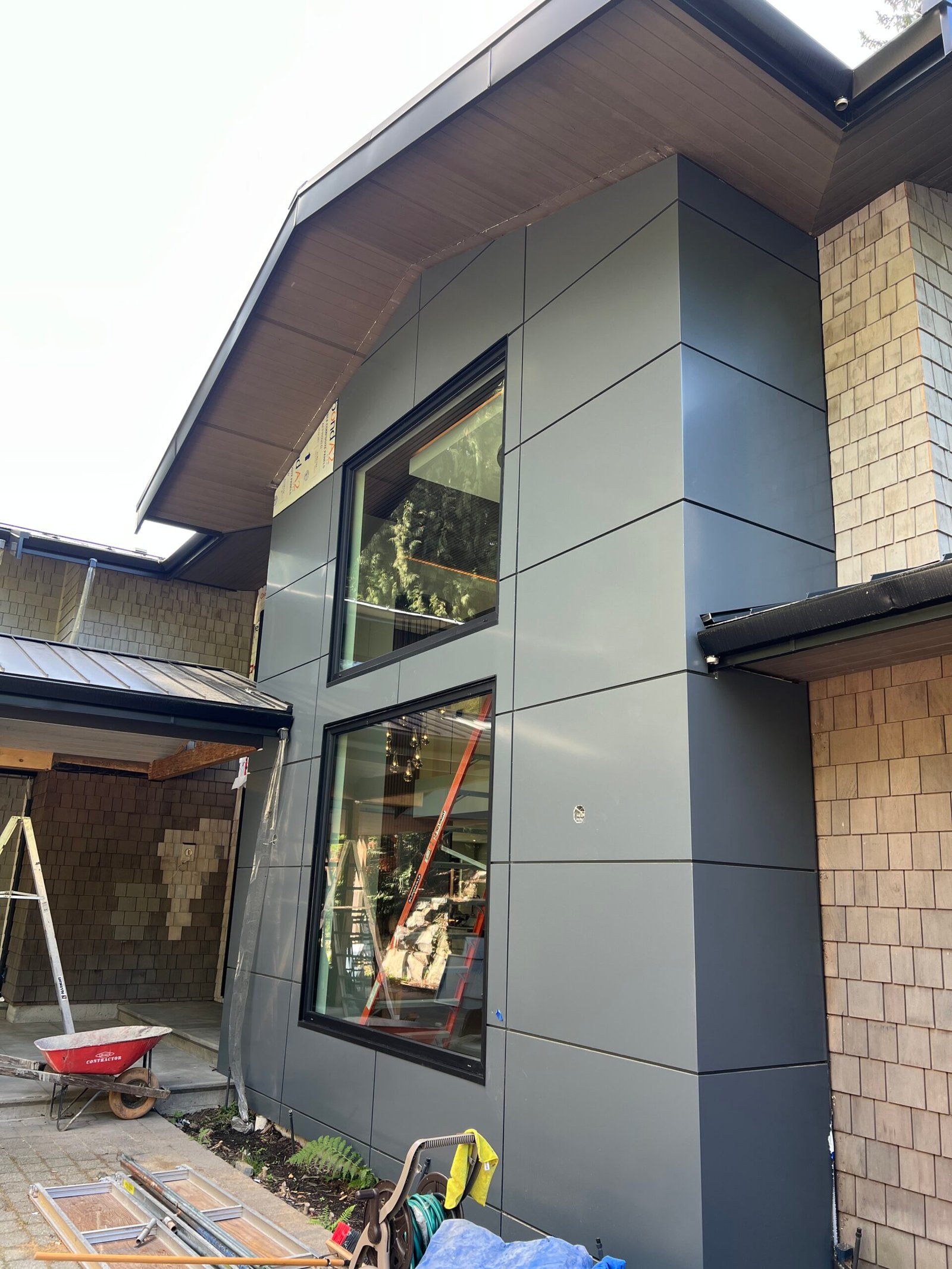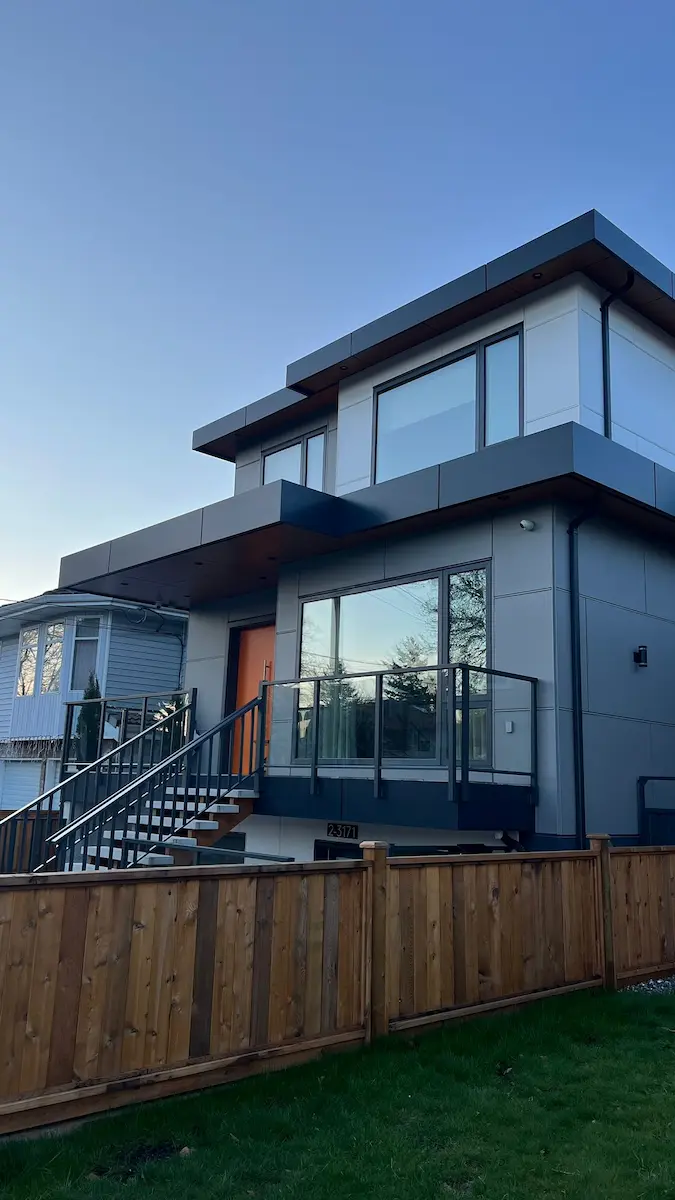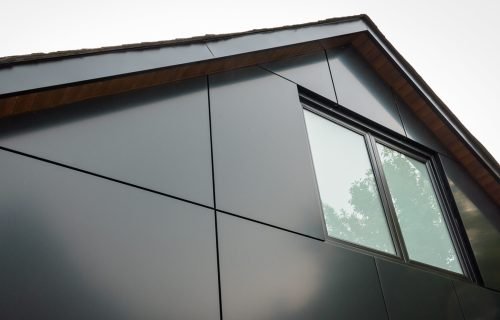
ACM (Aluminum Composite Material) panels are a lightweight cladding system made from two layers of aluminum bonded to a rigid core, often chosen for commercial façades, multi-family buildings, and residential exteriors that call for a clean, modern finish with minimal upkeep.
At Silver Siding, we install ACM panel systems across Metro Vancouver — including Vancouver, North Vancouver, West Vancouver, Burnaby, and Richmond — with the moisture management and rain screen detailing that the coastal climate calls for.
Whether the project is a storefront, a strata building, or a single-family home, our team handles ACM panel installation from layout and panel selection through final detailing, backed by over a decade of hands-on experience in exterior cladding.
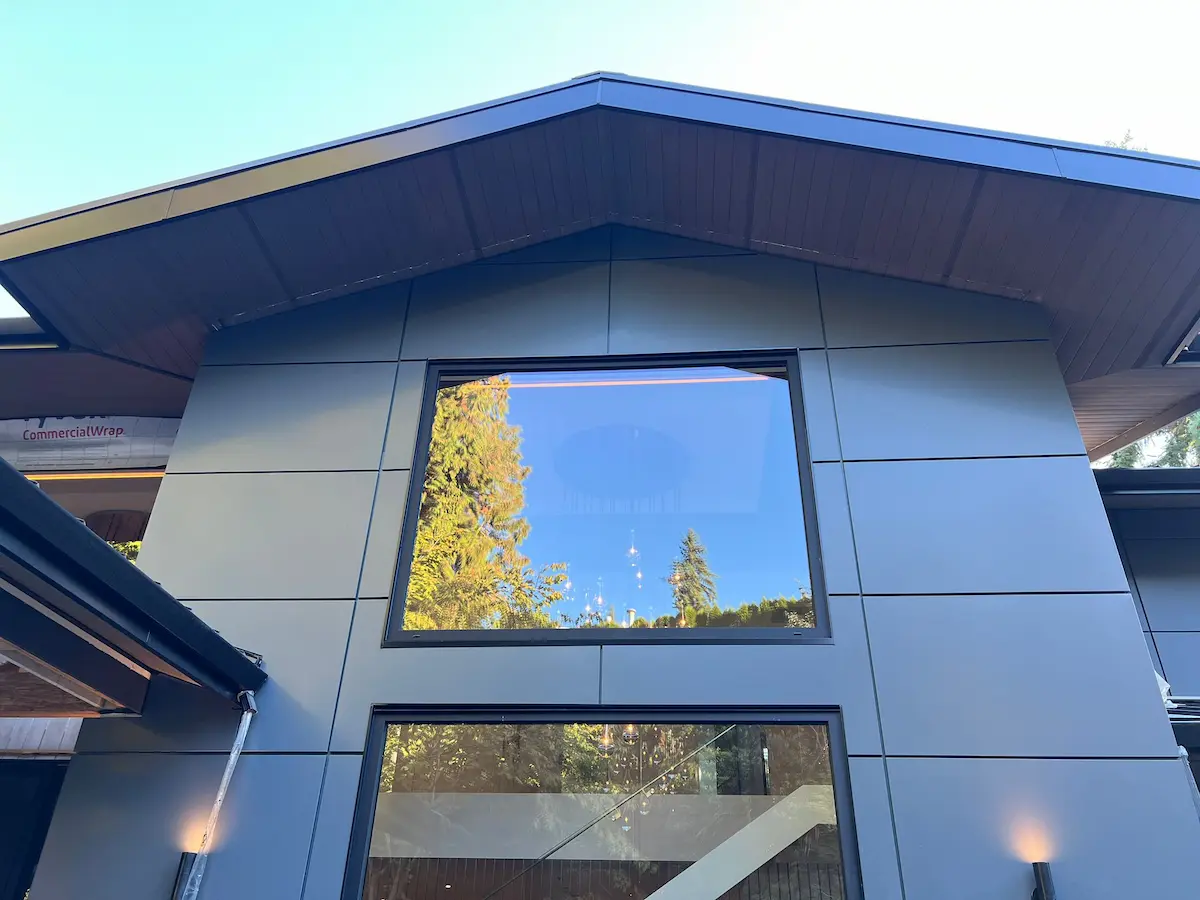
ACM (Aluminum Composite Material) panels are made from two thin sheets of aluminum bonded to a rigid inner core, creating a panel that’s lightweight but holds a flat, consistent shape — even across large wall sections where lesser materials tend to show waviness or warping over time.
Because the panels are factory-finished, the surface coating is applied under controlled conditions rather than on-site, which is part of why the color and texture tend to hold up evenly over the years. Panels are available in a range of finishes, from solid colors to metallic and woodgrain looks, and they can be cut and fitted to suit most façade layouts, including accent sections, signage panels, and full wall coverage.
Core type and panel thickness vary by manufacturer and by what the project calls for — including fire performance requirements for certain building types. Matching the right panel to the right project, and to the applicable building code, is part of what we work through with clients before any installation begins.
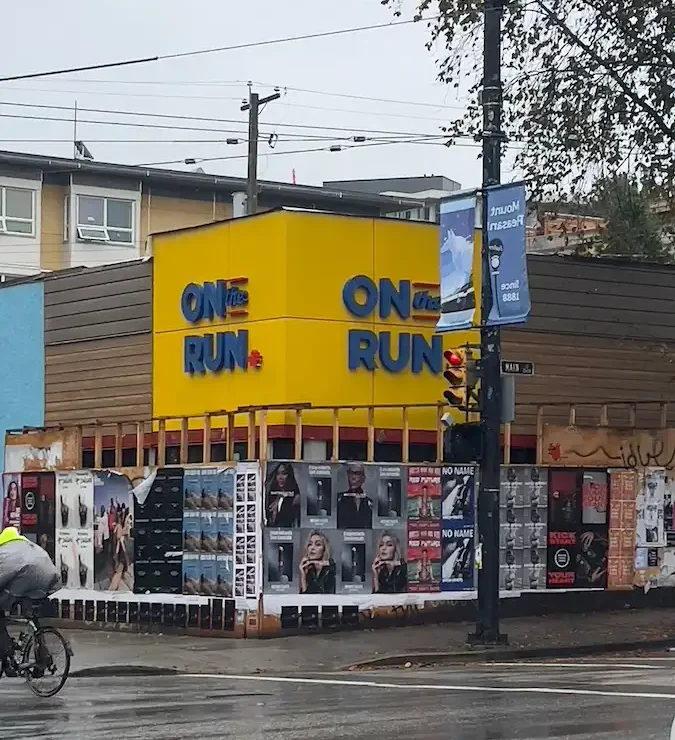
ACM is a common choice for storefronts, office buildings, and signage walls, where a clean, sharp-edged finish and consistent color across large panel runs matter for brand presentation. It’s also straightforward to incorporate as an accent material alongside glass, concrete, or other cladding types on a single façade.
For multi-unit and strata buildings, ACM panels are often used in recladding projects where the goal is to modernize the building’s exterior while improving how the wall assembly manages moisture. The lightweight nature of the panels also helps keep structural loads manageable on existing buildings.
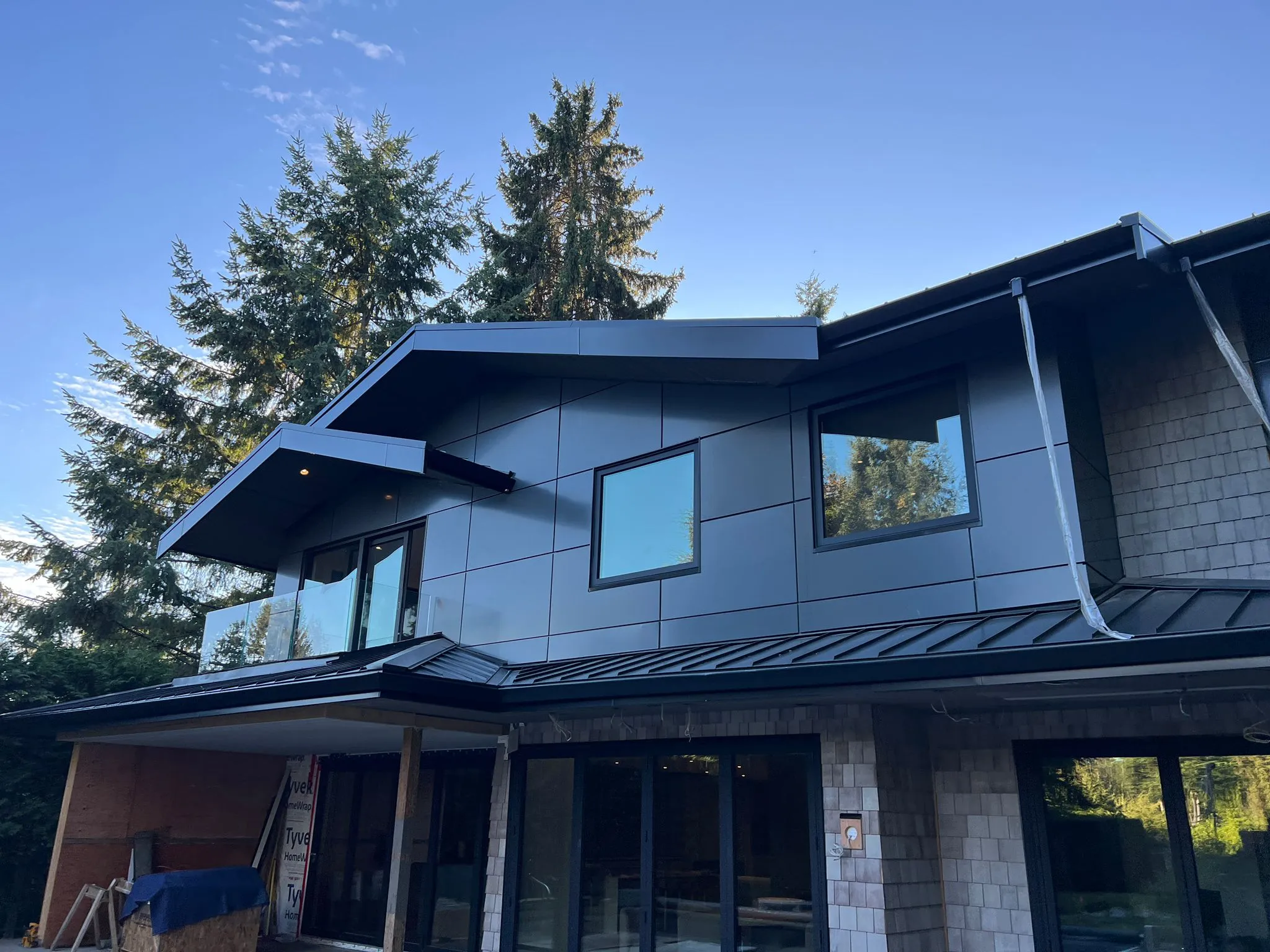
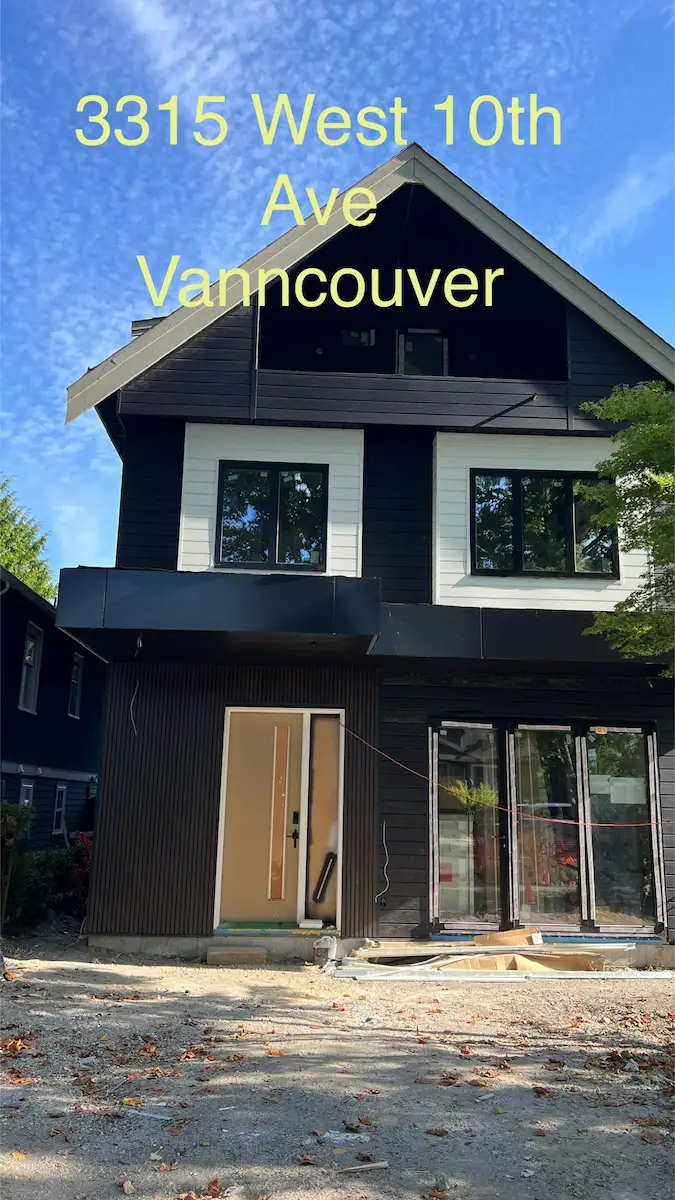
On single-family homes, ACM panels are typically used either across a full exterior or as an accent — around an entryway, a feature wall, or a second-story section — paired with another material like fiber cement or wood-look siding. It suits homeowners who want a contemporary look without the repainting and resealing that some traditional materials require.
ACM is also sometimes used for soffit and fascia detailing on commercial and multi-family projects. Find out more about that service if it applies to your project.
Benefits of ACM panel siding include:
A few things worth knowing before you commit to ACM:
Panel core type affects fire performance, so the right product depends on the building type and what the local code requires for that application — this is something to confirm during planning rather than after panels are ordered.
Joint and seam detailing is where most ACM installation problems actually start. Panels are typically installed as part of a rain screen assembly, which creates the drainage gap that lets any moisture behind the cladding escape rather than sit against the wall. Read more here about how that system works.
Before any panel goes up, an air barrier is installed over the substrate to protect the wall assembly underneath. Click here for more on that step.
ACM panels also tend to cost more upfront than vinyl siding, though the lower long-term maintenance often offsets that difference over the life of the panels.
ACM panel cladding can be a good fit across most of Metro Vancouver, though the right approach often depends on building type, exposure to weather, and what the local strata or permitting process looks like. Here’s a general sense of how it tends to apply by area:
| Service Area | Why This Service May Be a Good Fit | Common Project Types | Local Considerations |
|---|---|---|---|
| Vancouver | A dense mix of commercial storefronts, multi-family buildings, and updated single-family homes makes ACM panel cladding a fit for a wide range of project types across the city. | Storefront and office façades, condo recladding, accent walls on character home renovations | Permit and strata approval timelines can vary by neighborhood, so early planning often helps keep a project on schedule. |
| North Vancouver | A mix of waterfront properties and hillside homes means a durable, panel-based finish can be a practical option where wind and rain exposure tend to run higher. | Hillside home exteriors, accent feature walls, small commercial buildings | Homes on slopes or near the water may need extra attention to drainage detailing behind the panels. |
| West Vancouver | The area’s concentration of modern architectural homes and higher-exposure coastal sites often calls for a low-maintenance finish like ACM. | Contemporary home exteriors, accent and feature wall sections, renovation projects on older homes | Properties closer to the waterline can be exposed to more direct weather, which is usually factored into panel and drainage planning. |
| Burnaby | A strong base of multi-family and strata buildings makes ACM a common option for recladding and exterior upgrades. | Strata recladding, multi-unit residential exteriors, light commercial façades | Strata council approval and building age can affect project scope, so this is usually addressed early in planning. |
| Richmond | A significant amount of commercial and multi-family development can make panel-based cladding a good fit for both new builds and upgrades. | Commercial and retail façades, multi-family buildings, single-family home accents | Local drainage and ground conditions are sometimes factored into how the wall assembly is detailed. |
ACM isn’t the only panel-based cladding option we install, and it isn’t always the right fit. Here’s how it stacks up against a few alternatives we work with regularly.
Metal siding is typically a solid, single-layer metal panel, while ACM is a composite panel — two aluminum sheets bonded to a core — which gives it a flatter finish and a lighter overall weight. If a solid metal panel finish suits your project better than a composite panel, take a look at that option.
LUX panels are made from heavy-gauge galvanized steel rather than an aluminum composite, which gives them a different weight and feel underfoot during installation, along with a different finish profile. For a steel-based architectural alternative with a similar modern look, learn more about that system.
Longboard siding uses an extruded aluminum profile with a wood-grain finish, which tends to suit projects looking for a warmer, more natural appearance than the flat panel look of ACM. Longboard is worth comparing if that’s the direction you’re leaning — see the details here.
AL13 is the closest match to ACM in our lineup, also built as a lightweight aluminum panel system, though the two differ in panel construction and finish options. Explore this option if you want to compare the two side by side.
ACM panel cladding is one of several exterior systems we install across Metro Vancouver. A few related services that often come up alongside an ACM project:
Before any ACM panels go up, we assess the existing wall assembly — checking for moisture damage, confirming the substrate is sound and flat enough for a panel system, and flagging anything that needs attention before installation starts. Panel systems show substrate irregularities more than most cladding types, so this step gets skipped at a cost.
A Tyvek air barrier is installed over the substrate before the panels go on. Where needed, a rain screen system creates a drainage gap that allows any moisture that gets behind the panels to escape rather than accumulate. In Vancouver's climate, these aren't optional extras — they're part of doing the job properly.
Panels are measured, cut, and routed to fit the façade layout, then secured using the appropriate fastening system for the substrate and panel type. Joints, corners, and transitions are detailed carefully, since rushed panel-to-panel gaps are the most common point of water entry on a composite panel installation.
10+
Years of experience
100+
Completed projects
100%
Licensed & insured
Free
Estimate — no obligation
Licensed & WorkSafeBC Compliant
Every project meets BC Building Code standards. Fully insured on every job.
Rain Screen as Standard
Not an upgrade — the baseline. Every installation is detailed for Vancouver's rainfall levels.
Free, Itemised Estimates
No vague quotes. A clear, detailed breakdown before any work begins.
The Right Panel, Properly Specified
Aluminum composite panels selected to match each project's performance and finish requirements, sourced from trusted suppliers. No substitutions without your approval.
Local Team
Based in West Vancouver, minutes from North Vancouver. We know the terrain, the access challenges, and the permit requirements.
Clean Job Sites
We respect your property. Thorough cleanup is part of every project, every time.
ACM panels are made from two thin sheets of aluminum bonded to a rigid inner core. This construction gives the panel a flat, lightweight profile that holds its shape well across large wall sections, which is part of why it's become a common choice for modern building exteriors.
Yes. ACM panels work well on single-family homes, either across a full exterior or as an accent section around an entryway or feature wall. They're often paired with another material like fiber cement or wood-look siding for a mixed-material look, and they suit homeowners who want a clean, contemporary finish without frequent repainting.
With correct installation — proper substrate preparation, an air barrier, and attention to joint and drainage detailing — ACM panels can perform well for decades. Most of the issues that shorten a panel system's lifespan trace back to installation details rather than the material itself.
Fire performance depends on the panel's core type, and different building types and applications have different code requirements around this. Rather than give a blanket answer, we confirm the right panel and core type for your specific project and the applicable building code during the planning stage.
Painting over a factory-finished ACM panel can affect the warranty and the long-term appearance of the finish, since the original coating is applied under controlled conditions that are hard to match on-site. If the color or finish needs to change, it's usually a better outcome to discuss panel replacement or refinishing options with us rather than repainting in place.
Metal siding is typically a solid, single-layer metal panel, while ACM is a composite panel made of two aluminum layers bonded to a core. That construction gives ACM a flatter finish and lighter weight, though both are durable options depending on the look and performance you're after for your project.
Yes, when installed with the right detailing. ACM panels themselves resist corrosion and don't absorb moisture, but the real protection against Vancouver's rainfall comes from the air barrier and rain screen assembly installed behind the panels — that's what manages any water that gets behind the cladding.
Whether it’s a commercial façade, a strata recladding project, or a residential exterior, we can walk through what’s the right fit for your building and put together a clear, itemized estimate — no obligation.
Get a quote today
Hours
Why Silver Siding exterior
Fill out the form below