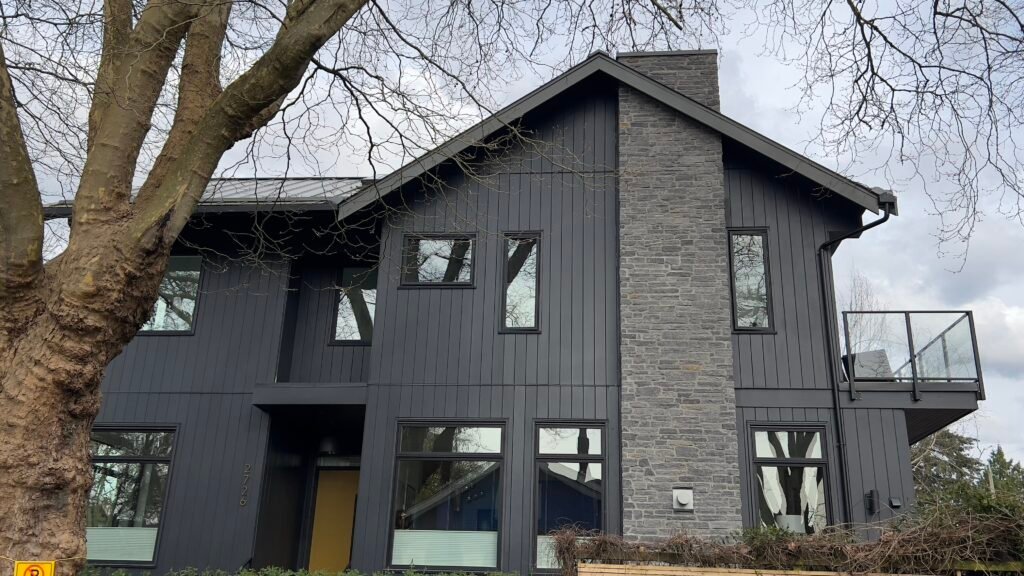
Stone veneer cladding installed on a residential exterior — a common choice for homes across the Vancouver area looking for a natural stone appearance with lighter-weight panels.
Stone veneer siding — sometimes called cultured stone or faux stone cladding — is one of the more permanent-looking exterior upgrades a homeowner can make. It adds the weight and texture of natural stone without the structural demands of full masonry, and in Vancouver’s climate, that combination of durability and moisture resistance matters.
At Silver Siding, we install stone veneer panels, cultured stone cladding, and stacked stone siding on residential properties across Vancouver, North Vancouver, West Vancouver, Burnaby, and Richmond. If you’re trying to figure out whether stone veneer is the right fit for your home — or what the difference is between the options — this page covers what you need to know.
Stone veneer siding is a thin layer of stone material — either natural or manufactured — applied to the exterior surface of a building. Unlike full-stone masonry, it doesn’t carry structural load. It sits on top of the substrate and gives the appearance of solid stone at a fraction of the weight and cost.
The term covers a few different products that are often used interchangeably:
If you’ve been searching for cultured stone installation or exterior stone cladding and aren’t sure which product fits your project, that’s something we can walk you through during a consultation.

Vancouver’s climate puts exterior materials through a real test — persistent rain, moisture, freeze-thaw cycles in higher elevations, and UV exposure in summer. Stone veneer holds up well in these conditions, but only when it’s installed correctly.
Stone veneer itself doesn’t absorb much water, but the substrate behind it and the installation method matter significantly. Improper flashing, missing moisture barriers, or skipped drainage gaps can lead to water getting behind the panels — which is a problem regardless of how durable the stone is. This is why a proper rain screen system and Tyvek air barrier installation are part of how we approach stone veneer projects in this region.
Cultured stone and natural stone veneer panels are rated to last several decades with minimal maintenance. They don’t rot, they’re not attractive to pests, and they don’t need painting or refinishing. For homeowners who want an exterior material they won’t be revisiting in ten years, stone veneer is a reasonable choice.
Stone veneer works particularly well as an accent material — entry columns, lower façade panels, foundation bands — rather than full exterior coverage. In North Vancouver and West Vancouver especially, where homes often sit on sloped lots with visible foundations, stone cladding on the lower portion of the exterior is a common and effective application.
Stone veneer is not the right choice for every project, and it’s worth being straightforward about that.
It’s also worth noting that stone veneer siding is a different service from brick and stone siding — which involves different materials, installation methods, and structural considerations. If you’re looking for that type of work specifically, you can find more detail on our brick and stone siding page.
| Service Area | Why Stone Veneer May Be a Good Fit | Common Project Types | Local Considerations |
|---|---|---|---|
| North Vancouver | Hillside and mountain-adjacent homes often benefit from stone veneer as a lower façade or foundation accent — it complements the natural surroundings and holds up well in higher-moisture zones. | Residential accent cladding, entry columns, foundation bands, renovation upgrades | Freeze-thaw cycles at higher elevations make proper moisture barrier installation especially important. Substrate prep and drainage gaps should not be skipped. |
| West Vancouver | Properties in West Vancouver frequently combine premium cladding materials. Stone veneer works well as part of a mixed-material exterior alongside wood or fiber cement. | Custom home exteriors, mixed-material facades, feature walls, entryway cladding | Many properties are on sloped lots with visible foundations — stone veneer on the lower exterior is a common and practical application in this area. |
| Burnaby | Burnaby’s mix of older homes and newer builds makes stone veneer a popular upgrade choice — particularly for homeowners refreshing the exterior without a full renovation. | Exterior refresh projects, accent panels, residential re-cladding | Older substrates may need inspection before veneer installation. Moisture damage behind existing cladding is worth checking before panels go on. |
| Richmond | Stone veneer can be a good fit for Richmond properties where curb appeal and long-term durability are priorities, depending on building type and substrate condition. | Residential exterior upgrades, entry features, lower façade cladding | Richmond’s lower elevation and soil conditions mean some buildings may have specific substrate requirements. Installation approach may vary depending on the structure. |
| Greater Vancouver | Stone veneer siding is suitable for a wide range of residential projects across the Metro Vancouver area, particularly where a natural stone appearance is desired without full masonry installation. | Residential exteriors, mixed-material cladding, accent features | Installation requirements vary by building age, substrate type, and exposure. A site assessment helps determine the right approach for each property. |
Fiber cement siding — including products like James Hardie — is a practical, lower-cost alternative to stone veneer. It’s durable, paintable, and handles Vancouver’s moisture well. Stone veneer offers a more distinctive appearance and doesn’t require repainting, but costs more upfront and takes longer to install. If you’re weighing the two, it often comes down to budget and the look you’re after. You can find more detail on our fiber cement siding page.

Vinyl siding is the more economical option. It’s lightweight, low-maintenance, and available in a wide range of profiles. Stone veneer has a significantly different visual weight and texture — it’s not really a like-for-like comparison. Some homeowners use vinyl as the primary cladding and stone veneer as an accent on specific sections of the exterior. If budget is the main consideration, vinyl siding is worth looking at first.
This is a distinction worth clarifying. Stone veneer panels are a lightweight cladding system applied to the exterior surface. Brick and stone siding involves different materials, different installation methods, and in many cases different structural requirements. They are separate services and shouldn’t be treated as interchangeable. If what you’re looking for is closer to traditional masonry or brick-style work, our brick and stone siding page covers that in detail.
Stone veneer installation rarely happens in isolation. Depending on the condition of your existing exterior, other work may be needed before or alongside the cladding itself.
Stone veneer installation is more involved than it might look from the outside. The visible panels are the last step — what happens underneath determines how well the cladding performs over time, especially in a climate like Vancouver's.
Before any panels go on, we assess the existing wall assembly — checking for moisture damage, verifying the substrate is sound, and identifying any areas that need attention before cladding begins. Skipping this step is one of the more common reasons stone veneer installations run into problems down the line.
A Tyvek air barrier is installed over the substrate before the veneer goes on. Where needed, a rain screen system creates a drainage gap that allows any moisture that gets behind the panels to escape rather than accumulate. In Vancouver's climate, these aren't optional extras — they're part of doing the job properly.
Panels are cut, fitted, and secured according to the manufacturer's specifications and the specific profile being installed — whether that's stacked stone, ledger stone, or another style. Corners, transitions, and edges are finished to ensure a clean result and reduce the risk of water entry at joints.
A completed exterior project by Silver Siding combining stone veneer cladding with fiber cement panels — a common approach for homeowners looking to balance visual impact with practical coverage.
Stone veneer projects vary considerably depending on the home, the substrate, and the profile chosen. If you want a clearer picture of what finished installations look like, our project gallery has photos from completed exterior projects across the Vancouver area — no descriptions, just the work itself.
10+
Years of experience
100+
Completed projects
100%
Licensed & insured
Free
Estimate — no obligation
Licensed & WorkSafeBC Compliant
Every project meets BC Building Code standards. Fully insured on every job.
Rain Screen as Standard
Not an upgrade — the baseline. Every installation is detailed for Vancouver's rainfall levels.
Free, Itemised Estimates
No vague quotes. A clear, detailed breakdown before any work begins.
Premium Materials Only
Stone veneer, cultured stone, and natural stone panels from trusted suppliers. No substitutions without your approval.
Local Team
Based in West Vancouver, minutes from North Vancouver. We know the terrain, the access challenges, and the permit requirements.
Clean Job Sites
We respect your property. Thorough cleanup is part of every project, every time.
Natural stone siding uses full-thickness pieces of real stone cut from quarried material. Stone veneer — including cultured stone and faux stone panels — is a thinner, lighter product designed to replicate the appearance of natural stone without the structural load or cost. Both are installed on the exterior surface, but veneer is far more common in residential projects because of its weight and installation advantages.
Cultured stone and natural stone veneer panels are generally rated to last several decades. The material itself is durable — what affects longevity more is the quality of the installation behind it. A properly installed moisture barrier, drainage gap, and substrate preparation will determine how the veneer performs over time, particularly in Vancouver's wet climate.
Stone veneer handles moisture well when installed correctly. The panels themselves don't absorb much water, but the wall assembly behind them needs to be detailed properly — Tyvek air barrier, appropriate flashing, and in many cases a rain screen system to allow drainage. Without these, moisture can accumulate behind the panels regardless of how durable the stone is.
Stone veneer is generally considered a value-adding upgrade, particularly when used as an accent material on the lower façade or entry area. It improves curb appeal and signals quality to buyers. That said, return on investment varies depending on the neighbourhood, the scope of the project, and how the veneer is integrated with the rest of the exterior.
These are two separate services. Stone veneer siding uses lightweight panels — natural or manufactured — applied to the exterior wall surface. Brick and stone siding involves different materials, different installation methods, and in many cases different structural considerations. If you're looking for that type of work, our brick and stone siding page covers it in detail.
Yes. We work on both residential and commercial exterior projects across Vancouver, North Vancouver, West Vancouver, Burnaby, and Richmond. Scope, timeline, and approach vary depending on the building type — contact us to discuss your project.
Get a quote today
Hours
Why Silver Siding exterior
Fill out the form below