
Siding Repair and Replacement Across Metro Vancouver
Cracked panels, water behind the cladding, rot around openings, sections that never sat right after the last job — damaged siding rarely stays a cosmetic problem for long on this coast.
We assess what is actually happening behind the surface, then repair or replace only what needs it, with a finish that matches the rest of the wall.
Siding is the layer that keeps rain out of a wall assembly. When part of it fails — through impact, age, trapped moisture, or a detail that was never installed correctly — the damage rarely stops at the panel you can see.
Silver Siding Exterior repairs and replaces damaged siding across Metro Vancouver: cracked and broken panels, holes, loose or lifting sections, water-affected walls, and full replacement where a repair no longer makes sense. We work on the same cladding systems we install — vinyl, fibre cement, metal, architectural panels, and stone veneer — regardless of who carried out the original installation. Every job starts with an on-site assessment and a free, itemised estimate.
Can Your Siding Be Repaired, or Does It Need Replacing?
This is the question almost every homeowner arrives with, and the honest answer depends on three things: how far the damage extends behind the visible surface, whether a matching product is still available, and whether the wall assembly underneath is sound.
A localised repair makes sense when the damage is contained, the substrate behind it is dry and intact, and the existing cladding can be matched closely enough that the repair is not obvious from the street. In that situation, replacing a whole elevation is money spent for no gain.
Full replacement becomes the better decision when moisture has reached the sheathing across a broad area, when the same damage keeps recurring because the wall was never detailed for this climate, or when the existing product has been discontinued and no acceptable match exists. In those cases a patch buys a season or two and nothing more.
You will have that answer at the assessment, before any work is scoped — including when a repair is the wrong call. Below are the issues we are called out to most often, and you can see the standard of finish we work to across our completed exterior projects.
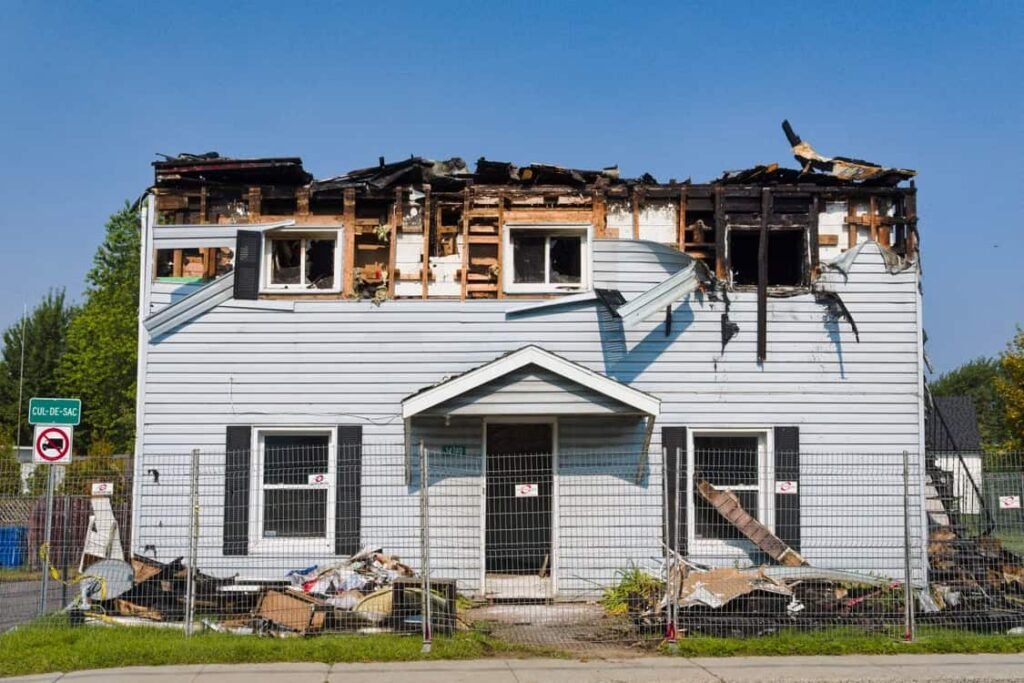
Cracked or split panels
Likely cause: Physical impact — ladders, branches, debris
Typical outcome: Localised panel replacement
Holes or punctures
Likely cause: Impact damage or fastener failure
Typical outcome: Panel replaced, surrounding panels checked
Loose or lifting sections
Likely cause: Fastener failure, wind exposure, thermal movement
Typical outcome: Refastening, or replacement if the panel has deformed
Soft or spongy areas under pressure
Likely cause: Water ingress reaching the sheathing
Typical outcome: Wall opened to assess the substrate before any repair
Rot at the base of a wall or around openings
Likely cause: Persistent moisture, failed or missing flashing
Typical outcome: Affected area repaired plus correction of the water path
Mould staining or a persistent damp smell
Likely cause: Trapped moisture, no drainage cavity behind the cladding
Typical outcome: Assessment of the full wall assembly, not the surface alone
Faded, chalky or mismatched finish
Likely cause: UV exposure and product age
Typical outcome: Depends on whether a matching product is still available
Small and Minor Siding Repairs
Not every job is a full elevation. A single cracked panel, a hole from a ladder or a falling branch, one course that has worked loose in the wind, or a section of trim that has pulled away — these are small repairs, and homeowners often struggle to find a contractor willing to take them on at all.
We assess small repairs the same way we assess large ones, because the size of the visible damage tells you very little about the size of the actual problem. A hole in a panel is a straightforward fix if the sheathing behind it is dry; the same hole is the beginning of a much larger job if water has been getting through it for two winters. The assessment is what separates those two outcomes, and it is why we look at the wall in person rather than quoting from a photograph.
Where the damage genuinely is contained, the work is quick and the scope stays small. What we will not do is patch over a symptom and leave you to discover the cause a year later — if the assessment shows a wider problem, you will hear that before any work is scoped rather than after.
This is also the main difference between a specialist repair and a general handyman fix. Cladding systems are installed in a specific sequence with specific fastening and flashing details, and a panel refitted without regard to that sequence becomes the next water entry point. Understanding how the drainage layer behind the cladding is meant to work is what keeps a small repair small.
Urgent and Emergency Siding Repair
Some siding damage cannot wait for a scheduled appointment. A windstorm tearing panels off an exposed elevation, a tree or branch coming down against a wall, an impact that leaves the sheathing open to the weather — in each case the immediate problem is not the cladding, it is that the wall is no longer keeping water out.
On this coast that matters more than it would elsewhere. An opening in a wall assembly during a wet week does not stay a cladding problem for long; water reaches the sheathing, tracks down inside the assembly, and turns a panel replacement into a structural repair. The priority in an urgent call-out is therefore to close the assembly and stop the water path first, with the permanent repair and finish matching carried out afterwards once the extent of the damage is properly established.
Where scheduling allows, we prioritise urgent damage of this kind across our service area. If you have an open wall, missing panels, or active water entry, contact us directly rather than submitting a form — describe what has happened and we will tell you honestly whether we can attend, and what to do in the meantime if we cannot.
Storm damage of this kind is also the category most likely to fall within an insurance claim, so we document the condition of the wall thoroughly at the first visit, before anything is closed up or removed.
Siding Repair by Material
Vinyl Siding
Vinyl is the material we are asked about most for repair work, and it is also the one most prone to impact damage — it becomes brittle in cold weather and cracks under a knock that other cladding would shrug off. Loose or lifting courses are equally common, usually from panels being nailed too tightly at installation, which leaves no room for the thermal movement this material needs. Individual courses can generally be unlocked and swapped without disturbing the rest of the wall, provided a colour match exists. Full details of how we approach this material on new installations are worth reading if replacement turns out to be the better option.
Fibre Cement Siding
Fibre cement holds up well in this climate, but it is not immune. The failures we see are cracked or chipped boards from impact, swelling and delamination at cut ends that were never sealed, and moisture damage where boards were installed too close to grade or to a roofline. Repairs here demand attention to the cut edges and to the fastening pattern, because a board replaced carelessly will fail again at the same point. We work with both the James Hardie range and comparable fibre cement products.
Where the original product has been discontinued or the colour has drifted too far to match, an alternative fibre cement line can sometimes provide a closer match than the original manufacturer’s current offering, and Allura’s product range is one we draw on for this.
Metal and Panel Systems
Metal cladding and architectural panel systems fail differently. Rather than cracking, they dent, oil-can, or work loose at the fastening, and on older installations the finish can chalk or fade unevenly across an elevation. The repair challenge is almost always the same: these systems are installed in a set sequence, so removing a single panel from the middle of a run requires knowing how the system was assembled. Our work with metal cladding covers both repair and full replacement.
Composite panel façades bring their own issues, most often at the joints and returns where water entry begins, and repairs to aluminium composite façade systems usually mean re-detailing those transitions rather than simply swapping a face panel.
Proprietary panel systems each have their own fastening and trim logic, and matching an existing installation means sourcing from the same range wherever possible — whether that is the LUX product line, an aluminium extrusion system, or a woodgrain-finish aluminium façade.
Where a home has an existing extruded aluminium façade, replacement sections are ordered to the original profile and finish so the repair reads as part of the original run rather than a patch, which applies equally to AL13’s panel range and to Longboard’s woodgrain aluminium products.
Stone and Brick Cladding
Masonry cladding failures are usually about water, not impact — cracked mortar joints, efflorescence, loose units, and staining that indicates moisture moving through the assembly. It is worth being clear about the distinction between two things homeowners often use interchangeably: stone veneer is a lightweight cladding applied over a prepared wall, while full brick and stone construction is a different assembly with different repair requirements. For veneer work, see our stone veneer service.
Where the assembly is a genuine masonry build rather than a veneer, the repair approach and the detailing behind it change considerably, and that work is covered under brick and stone siding.
Soffit and Fascia Repair
Damage to soffit and fascia often shows up alongside siding damage, because they share the same water paths. Sagging or stained soffit panels, gaps at the fascia line, and pest entry at the eaves are all signs that water has been getting somewhere it should not. We handle these alongside siding work when the two are connected, so the wall and the eave are corrected as one assembly rather than in separate visits. For work focused solely on the eaves, see our soffit installation and replacement service.
Matching Existing Siding So the Repair Is Not Obvious
The question homeowners ask most often is whether the repair will be visible. It is a fair concern — a mismatched patch on a front elevation is worse than the damage it replaced, and it is the single most common complaint about siding repair work generally.
Our approach is to do whatever the match requires. That means identifying the original product and colour where possible, sourcing from the same manufacturer’s range, and accounting for the fact that existing cladding has weathered while new material has not. Where an exact match no longer exists, we present the realistic options before starting: the closest available substitute, relocating material from a less visible elevation to the visible one, or refinishing a full elevation so the transition falls at a natural break in the façade rather than mid-wall.
What we will not do is fit a panel that is obviously wrong and call the job complete. If a clean match is not achievable, we say so at the assessment stage.
Replacing Older Cedar, Wood and Aluminium Siding
Homes across the North Shore and the older neighbourhoods of Vancouver were built with cedar, painted wood, or aluminium cladding, and a large share of them are now at the end of that material’s service life. Cedar splits and cups, painted wood needs recoating every few years and rots wherever water sits, and aluminium dents permanently and fades unevenly.
We do not carry out ongoing repair and refinishing work on these older materials. What we do is replace them with a modern cladding system — fibre cement, vinyl, metal, or an architectural panel product — detailed for this climate from the wall out. In practice, homeowners who have been repainting or patching the same elevation every few years usually find replacement resolves the problem permanently rather than deferring it again.
Because these older walls were rarely built with a drainage cavity, replacement is also the point at which the assembly behind the cladding can finally be corrected — including a properly installed weather-resistive barrier that the original construction never had.
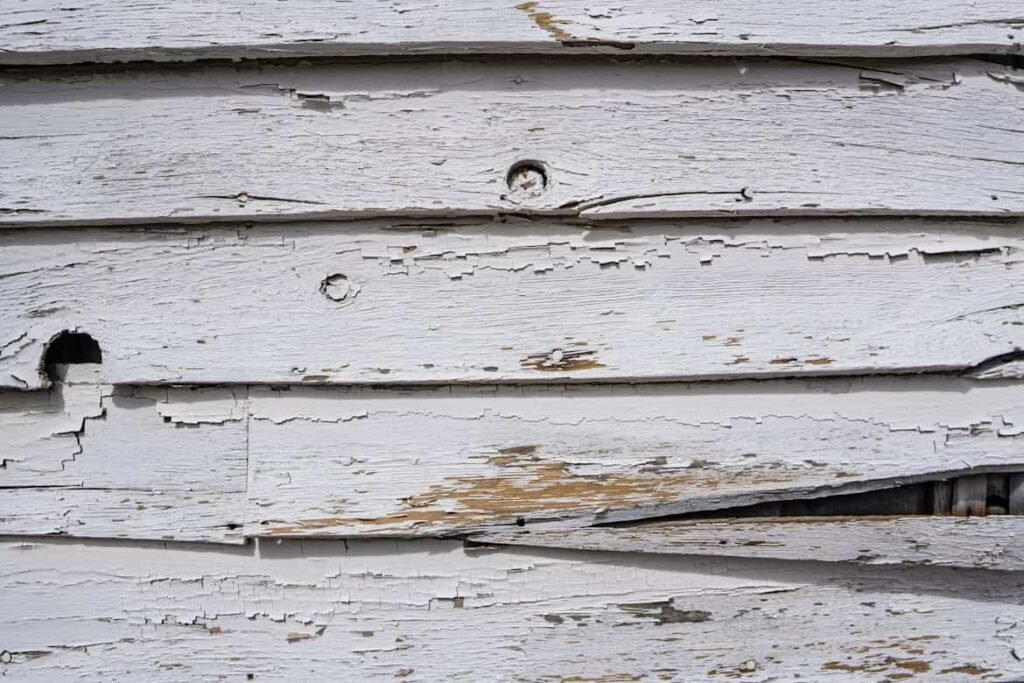
What Causes Siding to Fail on the Coast
Understanding why a wall failed matters, because it determines whether the same failure returns. Most of the damage we are called out to falls into two categories, and they behave very differently.
The first is physical impact — a ladder set against a panel, a branch coming down in a windstorm, debris, or damage during another trade’s work on the property. This kind of damage is usually visible, localised, and straightforward to scope once we can see the panel and the fastening behind it.
The second is weather-driven, and it is the one that costs homeowners more. Persistent rainfall, wind-driven moisture, and long damp periods put constant pressure on every joint, trim piece, and penetration in a wall. Where water finds a path in and has no way back out, it stays — leading to rot in the sheathing, mould behind the cladding, and eventually structural repair rather than a panel swap.
That second category is why we treat drainage as part of the diagnosis rather than an afterthought. If a wall has no functioning drainage cavity behind the cladding, replacing a damaged panel will not stop the problem from returning, and a properly detailed drainage cavity behind the cladding is often the actual fix.
Openings are the third recurring weak point. Windows and doors are where most water entry begins, and failed or missing flashing at these locations is one of the most common findings when we open up a damaged wall. We check how the openings were originally prepared and flashed before assuming the cladding itself is at fault.
Siding Repair Across Metro Vancouver
Exposure conditions vary noticeably across the region, and so does the damage we find. On the North Shore, elevation and tree cover mean heavier rainfall, more shade, and slower drying — which is why rot and mould behind cladding are more common findings there than on the flats.
In West Vancouver, steep lots and exposed hillside positions add wind-driven rain to the equation, and damage is often concentrated on a single weather-facing elevation while the rest of the home looks untouched.
Across North Vancouver, a large stock of homes built in the decades before drainage cavities became standard practice means repairs frequently reveal problems in the wall assembly rather than in the cladding alone.
In Vancouver itself, older housing stock and dense lot spacing mean access is often the constraint — narrow side yards, close neighbours, and limited scaffolding room all shape how a repair is carried out.
Homes in Burnaby tend to be newer, and the damage we see is more often impact-related or the result of installation shortcuts on relatively recent builds rather than material age.
In Richmond, flat, open exposure and proximity to the water mean sustained wind loading and salt-laden air, both of which accelerate fastener corrosion and finish degradation.
Our Repair Process
On-Site Assessment
We come out and look at the wall in person. Photographs sent by phone tell us very little about what is happening behind the cladding, and a diagnosis made without seeing the fastening, the trim details, and the condition around openings is a guess. The assessment establishes what is actually wrong before anyone talks about scope.
Determining the Extent of the Damage
Visible damage is the starting point, not the boundary. Where there are signs of water ingress, we open up enough of the wall to establish whether the sheathing and framing behind it are dry and sound. This is the step that determines whether the job is a panel replacement or something larger, and skipping it is how homeowners end up paying twice.
Repair, Replacement, and Correcting the Water Path
Damaged material is removed and replaced with a matched product, and any compromised barrier, flashing, or drainage detail is corrected at the same time. Putting new cladding over a fault that has not been fixed simply hides the problem until it returns, so the water path is addressed as part of the repair rather than as an optional extra.
Finish Matching and Final Walkthrough
The repaired section is checked against the surrounding wall for colour, profile, and alignment, and the site is cleared. We walk the elevation with you before calling the job finished, because the only standard that matters on a repair is whether you can tell where it was.
Why Homeowners Choose Silver Siding Exterior
10+
Years of experience
100+
Completed projects
5-Year
Workmanship warranty
Free
Estimate — no obligation
Licensed & WorkSafeBC Compliant
Every project meets BC Building Code standards. Fully insured on every job.
We Fix the Cause, Not Just the Panel
Failed flashing, missing drainage, trapped moisture — corrected as part of the repair, not left behind it.
Free, Itemised Estimates
No vague quotes. A clear, detailed breakdown before any work begins.
Finish Matched to the Existing Wall
Product, colour, and profile sourced to match. If a clean match isn't possible, we tell you before we start.
Local Team
Based in West Vancouver, minutes from North Vancouver. We know the terrain, the access challenges, and the permit requirements.
Clean Job Sites
We respect your property. Thorough cleanup is part of every project, every time.
Frequently Asked Questions About Siding Repair
Q1: Can damaged siding be repaired, or does the whole wall need to be replaced?
In most cases a localised repair is possible, provided the damage is contained and the wall behind it is dry and sound. Full replacement becomes the better option when moisture has spread through the sheathing, when the same failure keeps recurring because the wall lacks proper drainage, or when the original product is no longer available in a matching finish. We give you that answer at the assessment stage rather than after the work has started.
Q2: Will the repaired section match the rest of my siding?
That is the first thing we check. We identify the original product and colour and source a match from the same manufacturer's range wherever it still exists. Bear in mind that existing cladding has weathered and new material has not, so a small difference in tone is normal at first and usually closes over time. Where no acceptable match exists, we set out the realistic options — closest available substitute, relocating material from a hidden elevation, or refinishing a full elevation so the transition falls at a natural break in the façade.
Q3: Do you repair siding that another contractor installed?
Yes. We repair and replace the same cladding systems we install — vinyl, fibre cement, metal, architectural panel systems, and stone veneer — regardless of who carried out the original work. What matters is the material type and the condition of the wall assembly behind it, not who installed it.
Q4: Do you take on small siding repairs, or only large jobs?
We take on small repairs. A single cracked panel, a hole, a loose course, or a section of damaged trim are all jobs we look at. What we do not do is quote a small repair without seeing it, because the size of the visible damage is a poor guide to the size of the actual problem — a hole that has been letting water in for two winters is not a small job, whatever it looks like from the street. The assessment establishes which of the two you have.
Q5: Do you offer emergency or urgent siding repair?
Where scheduling allows, we prioritise urgent damage — storm damage, missing panels, impact damage, or any situation where the wall assembly is open and water is actively getting in. The first priority in these cases is closing the assembly and stopping the water path; the permanent repair and finish matching follow once the full extent of the damage has been established. If you are dealing with active water entry, contact us directly rather than submitting a form, and we will tell you honestly whether we can attend.
Q6: Do you repair cedar, wood, or aluminium siding?
We do not carry out ongoing repair and refinishing work on these older materials. What we do offer is full replacement with a modern cladding system detailed for this climate — fibre cement, vinyl, metal, or an architectural panel product. For homeowners who have been repainting or patching the same elevation every few years, replacement usually resolves the problem permanently rather than deferring it again.
Q7: How do I know if there is water damage behind my siding?
The common warning signs are soft or spongy areas when pressure is applied, dark staining that spreads outward, a persistent damp smell near an interior wall, paint or finish lifting from the inside face, and cladding that has started to bow or pull away. None of these can be confirmed from the outside alone — establishing what has happened to the sheathing requires opening up a section of the wall, which is part of our assessment where the signs are present.
Q8: Does home insurance cover siding repair?
It depends entirely on the cause and on the terms of your individual policy. Sudden, accidental damage — from a storm, a falling branch, or impact — is more commonly covered than gradual deterioration, and damage attributed to wear, age, or long-term moisture is frequently excluded. We are not insurance advisers, so the only reliable answer will come from your own provider. What we can do is document the damage clearly at the assessment stage so you have what you need for a claim.
Q9: Is siding repair work covered by a warranty?
Yes. Our repair and replacement work carries the same five-year workmanship warranty as our installation work. Any manufacturer warranty on the replacement material itself is separate and depends on the product used, and we will tell you what applies to your specific job before work begins.
Q10: How long does a siding repair take?
It depends on how far the damage extends and whether matching material needs to be ordered. A contained repair on a single elevation is a short job; where water has reached the sheathing and the wall assembly needs correcting, the timeline is longer because the underlying cause has to be dealt with properly rather than covered over. You will have a realistic timeline as part of the estimate, before anything is committed to.
Book a Siding Repair Assessment
If you have damaged siding, water staining, or a section of wall that has never looked right, the next step is an on-site assessment. We will tell you what is actually wrong, whether a repair or a replacement is the sensible call, and what it will take to put right — before you commit to anything.
Contact Silver Siding Exterior to arrange a free, no-obligation assessment anywhere across Metro Vancouver.
Get a quote today
Hours
Why Silver Siding exterior
Fill out the form below